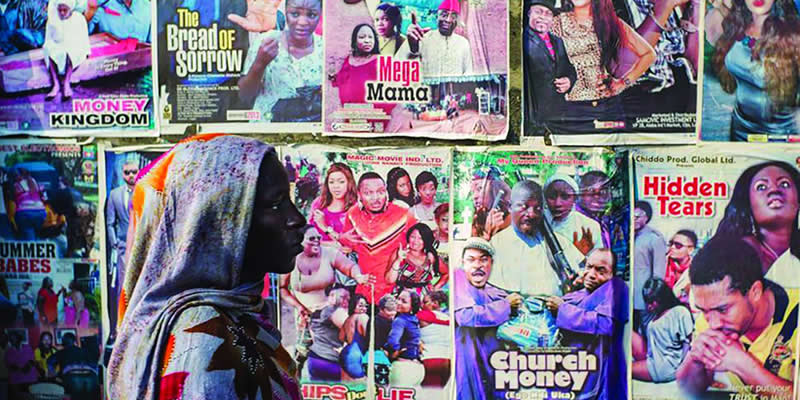
There was a time when Nollywood, the pride of Nigeria’s entertainment industry, stood on the brink of collapse. Despite being one of the largest film industries in the world, producing thousands of movies every year, many producers, directors, and actors saw little to no financial reward for their work. The reason? Piracy.
If you grew up in Nigeria in the early 2000s, you probably remember how easy it was to buy Nollywood movies off the streets. Vendors lined major roads, hawking DVDs in traffic, at bus stops, and in busy markets. Oshodi and Alaba international market was a hotspot. I still remember how, back in 2014, Aunty Bimbo would send me to buy these movies. Immediately after closing from work, I’d head straight to Oshodi, carefully picking and packaging CDs for her. Back then, I had no idea I was contributing to the very problem that was crippling Nollywood.
These sellers would shout out movie titles, offering entire collections for next to nothing. I used to buy Nollywood movies for ₦150 to ₦200 per CD, and it felt like a bargain. But what seemed convenient for consumers was devastating for filmmakers. The directors, producers, and actors who had spent months creating these films saw little to no return on their investment.
This is the story of how piracy nearly destroyed Nollywood, and how innovation, resilience, and a bit of Nigerian street-smart thinking saved it.
The Early Days of Nollywood: A Booming Industry
If there’s one movie that changed everything for Nollywood, it’s Living in Bondage. Before this 1992 classic came along, Nigerian entertainment was mostly limited to TV dramas and stage plays. Then, like a bolt from the blue, this low-budget Igbo-language film stormed the market, proving that locally made, home-recorded movies could sell. And not just sell, a mad number of copies flew off shelves.
Shot on VHS with little funding, Living in Bondage told a gripping tale of greed, ritual sacrifices, and the price of wealth. The film struck a chord with Nigerians, who saw reflections of their own struggles in the story. It wasn’t just entertainment, it felt real. That relatability made it a massive success, raking in millions despite the lack of formal distribution networks. The film’s unexpected triumph inspired countless filmmakers to jump into the game, birthing what we now call Nollywood.
The Affordability and Accessibility That Fueled Nollywood’s Growth
One thing about Nigerians? We love a good story. And when Nollywood came knocking, it didn’t disappoint. Unlike Hollywood or Bollywood, which required massive budgets and cinema distribution, Nollywood thrived on a more accessible format, home videos.
VHS tapes and later, VCDs, became the heart of the industry. You didn’t need a fancy theater to watch a movie; you could buy or rent a cassette and enjoy it in your living room. This system worked perfectly for the Nigerian audience. Electricity wasn’t always reliable (still isn’t, if we’re being honest), and cinemas were too expensive for the average person. But a home video? That was cheap and convenient.
Even more, Nollywood spoke directly to the people. The stories were raw, familiar, and packed with cultural references, from village struggles to urban hustles. Whether it was tales of love, betrayal, or supernatural forces, these movies reflected everyday Nigerian life. And people ate it up.
The Initial Business Model – Selling Movies Directly on VHS and Later DVDs
Back then, the Nollywood business model was simple: make a movie, copy it onto tapes, and sell them in markets, roadside stalls, and video rental shops. No need for expensive premieres or big promotional campaigns, word of mouth did the job.
Alaba International Market in Lagos quickly became the hub for this booming trade. Movie producers would partner with distributors, who would mass-duplicate tapes and flood the streets with new releases. It wasn’t uncommon to see sellers yelling movie titles at bus stops, pushing stacks of films into people’s hands. And since production costs were relatively low, filmmakers could turn a decent profit even if they sold at cheap rates.
By the early 2000s, VCDs and DVDs had replaced VHS tapes, making distribution even easier. The industry was growing at a ridiculous pace. Nollywood had found its audience, and its unique direct-to-consumer model was working like magic.
But then, just when things seemed to be getting better, a dark cloud appeared on the horizon. Piracy. And that’s where the real struggle began.
Piracy in Nollywood: A Full-Blown Crisis
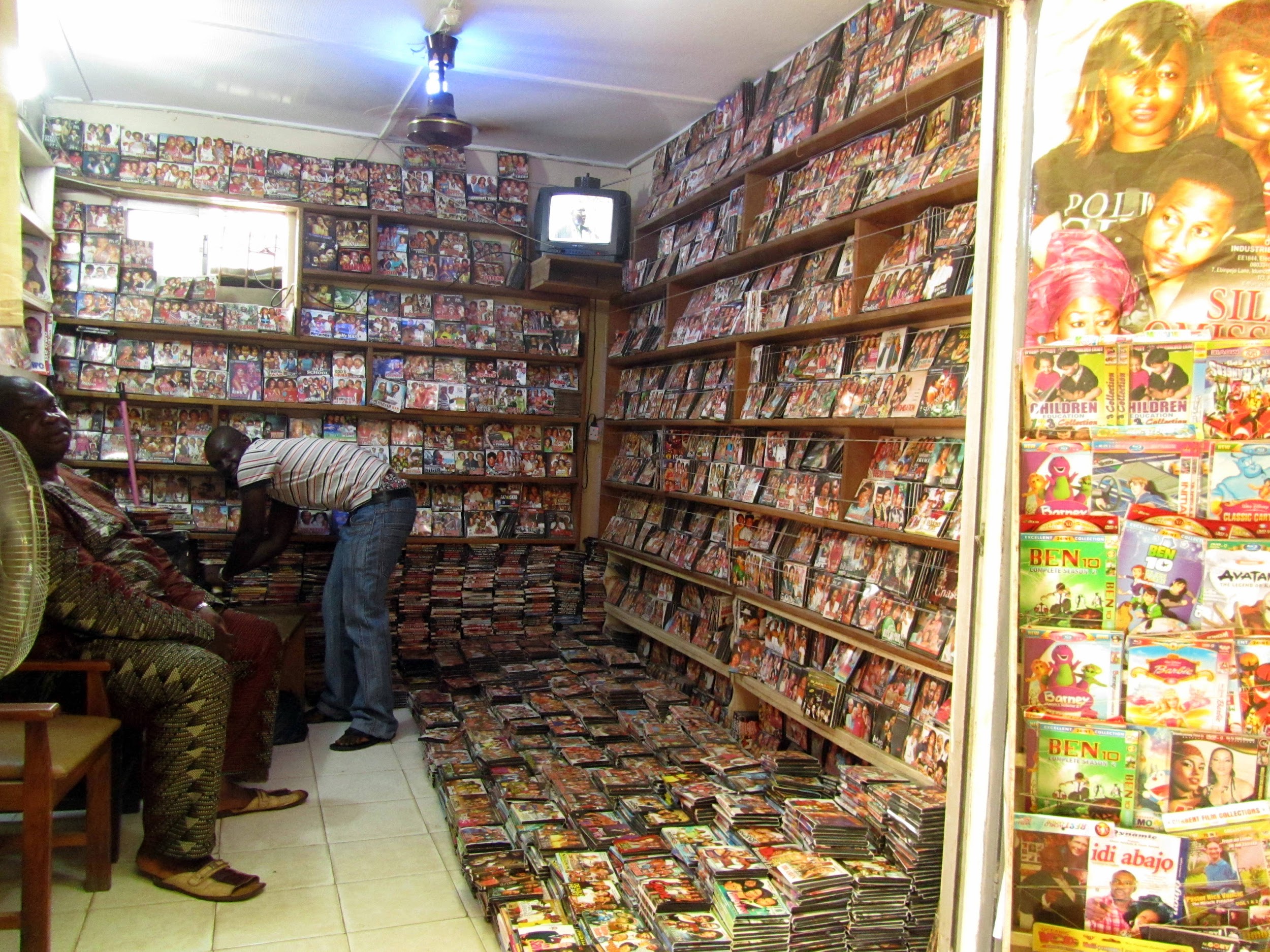
Nollywood’s rapid rise was almost too good to be true. Movies were selling, producers were making profits, and actors were finally getting paid. But as quickly as the industry grew, an unseen enemy was already lurking in the shadows, piracy. What started as a few unauthorized copies here and there soon exploded into a full-blown crisis that nearly crippled Nollywood.
This wasn’t just a small inconvenience, it was a disaster. At its peak, a Nollywood movie could be pirated and sold within 24 hours of release. Some films even hit the streets before their official release date, leaked straight from editing rooms. The situation became so bad that some producers gave up on filmmaking altogether, unable to justify the financial losses.
Back in the day, pirated cassettes and DVDs were the norm. A single cassette could contain Part 1, Part 2, and Part 3 of a trending movie all for “shikini money.” It felt like awoof for buyers, but in reality, it was killing Nollywood from the inside out.
How Alaba International Market Became the Piracy Hub of Africa
If you know Lagos, you know Alaba International Market. It’s the beating heart of Nigeria’s electronics trade, but by the early 2000s, it had also earned another reputation, the headquarters of piracy.
Alaba was where movie deals were made, but not all of them were legitimate. Filmmakers would take their movies to the market’s powerful distributors, expecting fair partnerships. Instead, (hmm… allegedly o), these same distributors would make thousands of unauthorized copies overnight, flooding the streets before the producers could even launch their films properly.
The operation was fast and ruthless. Once a movie got into the wrong hands, it was over. Street vendors, bus conductors, and even traffic hawkers were selling fresh releases before the official versions even hit stores. It was as if an invisible network had taken control of Nollywood’s entire distribution system. And in many ways, it had.
Real-Life Cases of Filmmakers Losing Their Investments Overnight
The stories were heartbreaking. Some of Nollywood’s biggest producers poured their savings into a movie, only to wake up the next day and find pirated copies already selling for a fraction of the price.
Teco Benson
By 2013, Nollywood’s piracy crisis had become a full-blown epidemic, crippling the industry and leaving filmmakers struggling to make profits. Renowned director Teco Benson, known for his action-packed thrillers, openly expressed his frustration about the devastating effects of piracy in an interview.
When asked about its impact, he didn’t hold back:
“Piracy is like a cancer that has really affected the industry, that can ruin it if nothing is done in time. These people seem to have a cartel that is above the law. They have about 10 films or more in a single CD at a cheaper rate. And people are really buying because of the economic situation of the country.”
His words reflected the harsh reality that many filmmakers faced. While they spent millions producing quality films, pirates mass-produced and sold them for next to nothing, stuffing multiple movies into a single CD. The low price made it difficult for consumers to resist, especially in a struggling economy where people prioritized affordability over legality.
Teco Benson once shared how he produced a blockbuster with high hopes, only for it to get pirated before he could even sell a single official copy. “It was as if someone took food out of my mouth,” he said in an interview. “We worked day and night, yet these criminals reaped all the benefits.”
Beyond the financial losses, Benson highlighted another major issue, the seeming invincibility of these pirates. He described them as a cartel above the law, operating without fear of consequences. Many filmmakers had reported cases to authorities, yet piracy rings continued to thrive, making it seem like no one had the power to stop them.
Lancelot Imasuen
Take the case of Lancelot Imasuen, a respected director and filmmaker who had spent months working on a major production. The morning after the film’s release, he walked into a Lagos market and saw his movie selling for a fraction of what it cost to produce. The pain was unbearable.
His historical epic, “Invasion 1897”, had toured cinemas worldwide and was set for official DVD release through G-Media Limited. However, with piracy running rampant in Nollywood, he knew that illegal copies could hit the streets.
While speaking to HVP during his time in the United States, where the film was on its final world tour, Imasuen issued a strong warning to pirates:
“Thank God, these evil men have not been able to see the film, and we are still praying to God that they shouldn’t. I am going to place a curse on anyone that wants to do something contrarily, other than procuring the film legally.”
His words reflected the deep frustration Nollywood filmmakers felt at the time. Piracy wasn’t just affecting profits, it was killing creativity, discouraging investors, and ruining careers. Many filmmakers had lost their investments overnight, and Imasuen refused to be the next victim.
But did this prevent his movie from being pirated, NO! Some of the perpetrators of this deed were nabbed by the Nigerian Police Force in 2016.
By 2017, Nollywood’s piracy problem had only worsened, and Lancelot Imasuen was once again a victim. His yet-to-be-released film, “ATM”, had already been pirated and was being sold on the streets before he could officially distribute it. Frustrated and heartbroken, he took to Instagram to express his pain and anger, calling on authorities and fans to take action.
In his emotional post, he wrote:
“The tears in my eyes as I write this piece cannot be compared to the pains and bitterness I carry right now inside my heart. The crass inhumanity of these flesh eaters called pirates grieves my soul so deep.”
Unable to contain his rage, he cursed those responsible for the piracy of his work:
“That I pronounce death, pains, and anguish upon them and their entire generations yet unborn. They may have survived others… but with my sweat and blood, I curse their roots. I stand on God’s word to declare that no man will eat my labour and sweat and have rest.”
For Imasuen, piracy was more than just theft, it was a betrayal of hard work, a destruction of dreams, and a threat to Nollywood’s survival. He lamented how Nigerian filmmakers had become helpless in the face of these criminals who profited off their creativity while leaving them in financial ruin.
Determined to fight back, he urged fans not to buy the pirated copies of ATM, promising that official copies would be released soon:
“Pirates of Nigerian films, pain has become a major part of your dwelling, and in ruin shall be your end. My film ATM has been pirated!!! Please don’t buy from those boys on the road and in traffic hold-up. I am officially releasing the original copies soon… Please, I am counting on your love and support.”
His plea highlighted the never-ending war against piracy in Nollywood, a battle that had already crippled many filmmakers. Despite efforts to curb it, the system still allowed pirates to thrive, leaving filmmakers like Imasuen to bear the emotional and financial burden of their stolen work.
Kunle Afolayan’s Battle with Piracy: The “October 1” Tragedy
In 2013, renowned Nigerian filmmaker Kunle Afolayan embarked on one of the most ambitious Nollywood projects at the time, “October 1”. With a staggering $2 million (₦315 million) budget, the film was shot across Lagos, Ilara-Mokin, Akure, and nearby villages, meticulously recreating the 1960s with period costumes and props.
After months of intense work, the movie premiered on September 28, 2014, and was later released to international audiences on October 3, 2014. Despite being a critically acclaimed thriller, the film earned just over ₦100 million ($610,000) in six months, a fraction of what was expected. Afolayan was devastated.
The reason? Piracy.
A Devastating Blow: The Day Kunle Afolayan Got the News
On Monday, April 13, 2015, Afolayan received a chilling text message, it was official: his movie had been pirated. Thousands of illegal copies of October 1 had flooded the streets of Lagos, sold at a fraction of the cost.
Speaking to journalist Funsho Arogundade, the award-winning director opened up about the betrayal, the warnings, and how he fought but still lost to the piracy syndicates of Alaba International Market.
Kunle Afolayan Recounts the Nightmare
Can you tell us about the pirating of your latest film, October 1?
“It all started a couple of weeks ago when my distributor, Gabosky, and I were in South Africa. He had received a message from someone in Nigeria, a threat from some Alaba people that they had a copy of my film October 1 and that they would pirate and release it into the market.
Immediately the message came, he showed me the text which stated that the people would release the film the following Monday. We panicked and started calling necessary people.
When we got back to Lagos, we discovered that they did not carry out their threat as it related to October 1, but they had flooded the streets with pirated copies of Phone Swap. Of course, Gabosky had already released the original of that (Phone Swap).
We immediately informed the Nigerian Copyright Commission (NCC), our lawyers, and the necessary security agencies about the threat and the release of Phone Swap. But it was not until this Monday morning (last week) that they carried out their threat concerning October 1.”
Kunle Afolayan’s pain and frustration echo the sentiments of countless Nollywood filmmakers who watch helplessly as their investments disappear into the hands of pirates. For him, October 1 was more than a film, it was a labor of love, a cinematic masterpiece, and a proof that Nollywood could produce world-class films. Yet, within days, it was ripped apart and sold illegally, cutting off any hope of financial recovery.
He eventually took to his Instagram page to plead stating;
“Pirated copies of October 1 film is now released by the Pirates and everywhere on the street. We have been announcing and alerting the people on government for years. Is this how we will fold our hands and look? It is my turn today, it may be yours tomorrow. I am devastated. It’s a hostile country. PLEASE DO NOT BUY.”
Nollywood Producers Spoke on the Evils of Piracy
Many producers, actors, and stakeholders have spoken out about the devastating impact of piracy, calling for government intervention and tougher laws. Below are firsthand accounts from some of Nollywood’s biggest names, detailing the damage piracy has done to the industry:
Chioma Okoye:
“Pirates really caused a great loss to the industry, because when you make a movie, before you know it, it has been pirated.”
Filmmakers barely have time to recoup their investments before pirates flood the market with cheap, illegal copies.
Emma Isikaku:
“In fact, the world knows that we are really having a tough time with pirates. They have taken the greatest chunk. They are not helping the industry at all.”
Piracy doesn’t just hurt producers; it affects actors, distributors, and investors, creating a ripple effect that threatens Nollywood’s sustainability.
Zik Zulu Okafor:
“Pirates have killed Nollywood in the process of selling ten films in just a CD. So, the film dies at birth.”
Many movies never get a chance to succeed because pirated versions flood the streets before the official release.
Chris Ekejimbe:
“Pirates made us lose billions of naira. They put many films in one CD and at a very cheap price.”
The industry loses billions annually, making it nearly impossible for producers to break even, let alone make a profit.
Vivian Ejike:
“There was real financial loss this year. The trend is day by day and will ruin the industry totally if not properly checked. We really want government intervention because a few weeks after producing, you can no longer gain from your sweat.”
Ejike highlights the urgent need for stricter anti-piracy laws, as Nollywood remains largely unprotected.
Joke Silva:
“Pirates made us record a huge loss. Producers and all others involved in distribution are affected because soon after production, you would see it in a CD alongside 10 others for just N150. It’s not fair.”
With movies selling for as little as N150 on pirated CDs, legitimate distributors struggle to compete, forcing many out of business.
Emem Isong:
“In fact, I can’t really quantify the magnitude of what pirates made us lose in the year. Government should please intervene.”
The lack of enforcement against piracy continues to embolden pirates, making Nollywood a soft target for intellectual property theft.
Saidi Balogun:
“Pirates really affected me in a lot of ways because even the films that have been released, the sponsors cannot get their money. It’s scary to sponsor movies. I have told my members that we shouldn’t campaign for any of them because we have been asking them to make piracy in Nigeria a punishable offence.”
Investors are reluctant to fund projects because of piracy, leading to a decline in high-budget productions.
Mercy Aigbe:
“Like I would always say, piracy kills creativity. When you know what you have to do to make a movie worthwhile, you are scared of putting your money into it. It’s really discouraging because nobody wants to invest and lose out.”
For Aigbe and many others, piracy not only steals revenue but also stifles innovation, as filmmakers hesitate to take risks when returns are uncertain.
Despite these outcries, Nollywood continued to battle rampant piracy, with filmmakers seeking alternative revenue streams like streaming platforms (Netflix, Prime Video, IROKO TV) to regain control over their work.
It didn’t matter how big or small you were, piracy didn’t discriminate.
How Pirates Gained Access to Unreleased Films
At first, people thought piracy was just a street-level problem. A few guys burning CDs in their backyards. But as time went on, it became clear that this was an organized crime syndicate.
Some pirates had insiders working directly with production studios. They’d bribe low-level employees to leak copies of films before their release. Others would wait until filmmakers took their movies to Alaba for duplication, then secretly make extra copies and distribute them before the official launch.
And then there were the underground factories, huge duplication centers hidden in plain sight. These places had industrial-grade CD burners capable of producing thousands of copies in a single night. By morning, the movies were everywhere, from Lagos to Aba, Onitsha, and even as far as Accra, Ghana.
The worst part? There was little the filmmakers could do about it. Even if they caught a pirate, another one would pop up the next day.
The Financial Toll: Actors, Producers, and Directors Barely Making Money
For Nollywood’s creatives, piracy wasn’t just an annoyance, it was a death sentence.
Producers stopped seeing returns on their investments. Some went bankrupt. Others simply gave up on making movies altogether. It wasn’t long before actors and directors started feeling the pinch too. If producers weren’t making money, they couldn’t afford to pay talent properly.
Actors like Pete Edochie, FUNKE Akindele, Genevieve Nnaji, and Ramsey Nouah, who once thrived in the industry, began exploring other options. Some shifted to TV. Others moved abroad. A few even left the industry entirely, disillusioned by the endless struggle.
At one point, Nollywood almost collapsed under the weight of piracy. It was an industry on the verge of extinction, gasping for air. But just when it seemed like all hope was lost, something changed. The fightback began.
How Nollywood Fought Back Against Piracy and Took Control
For years, piracy wasn’t just a problem in Nollywood, it was an existential threat. The industry bled billions as filmmakers watched their hard work get stolen overnight, sold in bulk for a fraction of its value. Alaba International Market in Lagos became the heart of the piracy empire, with networks so powerful they dictated which films thrived and which ones flopped.
Some filmmakers quit. Investors backed out. The situation seemed hopeless.
But Nollywood didn’t die. It fought back, slowly, painfully, but effectively. The battle against piracy wasn’t won overnight, and it certainly wasn’t won in one way. Instead, it was a combination of shifting business models, digital disruption, government intervention, and sheer determination.
So, how did Nollywood take back control?
The Breaking Point: When Piracy Became a Full-Blown Crisis
By the late 2000s and early 2010s, piracy was at its peak. It wasn’t just a few guys burning and selling DVDs on street corners, it was a full-fledged, organized industry. Pirates weren’t just making money; they were making more money than the actual filmmakers.
Take Kunle Afolayan’s October 1 in 2014, a film with a ₦315 million ($2 million) budget. Before he could even fully recoup his investment, pirated copies had flooded the streets. Afolayan was furious, devastated. The same fate befell other films, like Lancelot Imasuen’s ATM in 2017, prompting him to curse the pirates outright.
And it wasn’t just about a handful of directors, Nollywood as a whole was suffering.
Filmmakers were being forced to cut budgets because they couldn’t make their money back. The quality of storytelling started declining. Some even stopped producing entirely.
The Shift to Cinemas: A Desperate but Effective Move
Before this crisis, Nollywood operated on a straight-to-DVD model. A film was made, distributed in markets like Alaba, and that was how producers got paid. But piracy made that impossible.
So, Nollywood had to think differently.
In 2009, Kunle Afolayan took a risk with The Figurine. Instead of DVDs, he focused on cinema revenue. It was a gamble, but it worked. The film ran in theaters for months, making it harder for pirates to steal and replicate it immediately. But, due to the presence of few cinemas in the country as of 2009, the film’s total gross was approximated at around 30 million Naira, after eight weeks of theatrical run. However, the movie was able to recoup its investment through international screenings.
In 2016, The Wedding Party took things to another level, grossing almost ₦453 million ($1.2 million) at the box office. It proved that Nigerians were willing to pay for well-made movies in cinemas.
This changed everything.
Filmmakers realized they didn’t have to rely on DVD sales anymore. By keeping films in theaters for months, they could delay piracy long enough to make real money.
But there was still a problem, not everyone could afford cinema tickets. This meant that a huge portion of Nollywood’s audience was still stuck with pirated copies.
So, what next?
The Digital Disruption: How Streaming Weakened Pirates
While cinema culture was picking up, another revolution was happening online.
iROKOtv: Nollywood’s First Major Streaming Platform (2010)
In 2010, Nigerian entrepreneur Jason Njoku launched iROKOtv, the first major Nollywood streaming platform. At the time, Njoku saw a massive gap: people around the world wanted to watch Nollywood movies legally, but there was no easy way to do it.
Before iROKOtv, Nollywood’s distribution system relied heavily on physical DVDs, which were easily pirated.
Njoku’s idea was simple:
- Acquire the rights to Nollywood films.
- Digitize them for online streaming.
- Monetize through subscriptions and ads, allowing filmmakers to earn directly from views.
iROKOtv was nicknamed the “Netflix of Nollywood”, and for the first time, Nollywood films had a legal digital home. The platform was particularly popular among Nigerians in the diaspora, who had no access to Nollywood DVDs but were willing to pay for movies online.
However, iROKOtv faced challenges.
- Internet penetration was still low in Nigeria in 2010, meaning many people couldn’t stream movies easily.
- Pirates still found ways to rip movies from the platform and resell them.
- Data costs were expensive, making it difficult for local viewers to adopt streaming.
Despite these struggles, iROKOtv proved that streaming could be a viable alternative to piracy. It laid the groundwork for bigger players like Netflix to step in.
Netflix Enters Nollywood (2016) and Changes the Game
By 2016, Netflix had already conquered the global film industry, and it saw Nollywood’s potential. That year, Netflix quietly began buying rights to Nigerian films, making them available to a global audience.
But the real turning point came in 2018, when Netflix funded its first original Nollywood film, “Lionheart”, directed by Genevieve Nnaji.
This was a major milestone for two reasons:
- It signaled that international investors were ready to bet on Nollywood.
- It gave filmmakers a powerful new distribution channel, one that pirates couldn’t easily replicate.
After “Lionheart”, Netflix ramped up its Nollywood investment, funding big-budget productions like:
- King of Boys: The Return of the King (2021) by Kemi Adetiba
- Oloture (2020) by Kenneth Gyang
- Anikulapo (2022) by Kunle Afolayan
- Blood Sisters (2022) by Mo Abudu. This is the first Nigerian Netflix Original series.
For filmmakers, Netflix became a safe, piracy-proof platform. Unlike DVDs that could be copied and resold, Netflix content was locked behind a subscription wall, making it nearly impossible for pirates to steal and distribute films in bulk.
The presence of Netflix also forced Nollywood to level up. Since Netflix had strict quality standards, Nollywood producers had to invest in better storytelling, cinematography, and production quality.
YouTube: The Unexpected Savior for Independent Filmmakers
While iROKOtv and Netflix were fighting piracy on a premium level, YouTube quietly became a lifeline for struggling filmmakers.
Around 2017–2018, Nollywood producers started realizing something: instead of selling their films to Alaba pirates, they could upload them directly to YouTube and make money through ad revenue.
For small and mid-tier producers, this was a game-changer.
- Instead of fighting piracy, they embraced free access and made money from YouTube’s ads.
- YouTube gave filmmakers direct control over their content, no middlemen, no Alaba distributors.
- It allowed for wider reach, since anyone with an internet connection could watch Nollywood films legally.
Some Nollywood channels that blew up on YouTube include:
- Uchenna Mbunabo TV
- IrokoTV
- Ndani.tv
- YorubaPlus TV
- Nollywood Realnolly TV
These channels now generate millions of views, proving that free legal streaming could still be profitable.
The Big Picture: How Streaming Weakened Piracy
Before iROKOtv, Netflix, and YouTube, piracy thrived because it was the only way many Nigerians could access films. Streaming changed that by offering convenience, better quality, and legal access.
- iROKOtv introduced Nollywood to online streaming.
- Netflix gave Nollywood global legitimacy and exclusive content.
- YouTube provided a way for smaller filmmakers to bypass pirates and make money directly.
Today, piracy hasn’t disappeared completely, but it no longer dominates Nollywood like it once did. With more films going straight to cinemas and streaming, there’s less reliance on DVDs, making piracy less profitable.
Government Crackdown: Late, But Helpful
For years, Nollywood begged the government to do something about piracy, but action was slow. However, as Nollywood grew into a global force, pressure increased.
In 2015, former Nigerian President Goodluck Jonathan met with stakeholders in the entertainment industry in Lagos, where he announced the establishment of ‘Project ACT Nollywood’, a presidential intervention scheme. This initiative was designed to enhance the technical and professional capabilities of the Nigerian movie industry.
‘Project ACT Nollywood’ was similar to the N3 billion Nollywood Intervention Fund launched by the Jonathan administration four years prior. The project aimed to tackle major challenges hindering the industry’s growth, including poor distribution systems, the menace of piracy, and the need to improve the distribution of audio-visual content and protect intellectual property rights in the industry.”
Between 2017–2019, the Nigerian Copyright Commission (NCC) intensified efforts to combat intellectual property theft, launching several initiatives. These programs aimed to dismantle piracy networks and safeguard the rights of content creators. Notably, raids on notorious piracy hubs, including the Alaba International Market, led to significant seizures of counterfeit goods and served as a deterrent to potential infringers. These enforcement actions signaled a renewed commitment to protecting Nollywood’s creative assets.
As part of the government’s ongoing efforts to curb piracy, prominent Nollywood BIGWIGS such as Funke Akindele and Toyin Abraham have joined forces to raise awareness about the issue. These celebrities have taken to social media to caution their fans against recording movies in cinemas, emphasizing that such actions are illegal and may result in arrest. This collaborative effort between the government and Nollywood stakeholders aims to protect intellectual property rights, promote a culture of anti-piracy, and ultimately support the growth of the Nigerian film industry.
Although the government intervention wasn’t perfect, combined with cinema growth and streaming, it was enough to tilt the balance.
Let’s be clear, piracy is still alive. You can still find pirated Nollywood films online and on the streets. But here’s the difference: Nollywood no longer depends on the system that piracy thrives on. With cinemas, streaming platforms, and digital distribution, filmmakers have more control over their work than ever before.
NOLLYWOOD DIDN’T KILL PIRACY, IT OUTGREW IT.
And that’s how Nollywood took back control.
Conclusion
For years, piracy had Nollywood in a chokehold. Filmmakers poured their blood, sweat, and money into projects, only to see pirates cash in on their hard work. Alaba market controlled the industry, and it felt like there was no way out. But instead of collapsing, Nollywood adapted, innovated, and evolved.
The shift to cinemas in the 2010s forced audiences to experience films on the big screen before pirates could lay their hands on them. Then came the streaming revolution, led by iROKOtv, Netflix, and YouTube, which gave filmmakers a new way to distribute and monetize their work legally. At the same time, increased government involvement, tougher copyright enforcement, and a change in industry mindset all played a role in loosening piracy’s grip.
Is piracy dead? No. It still exists, lurking in corners of the internet and backstreet DVD stalls. But it no longer dictates Nollywood’s fate. The industry no longer relies on physical sales, which were piracy’s main target. With cinemas, digital platforms, and better content protection strategies, filmmakers now have more control over their work.
Nollywood didn’t defeat piracy by shutting it down, it simply became too big, too global, and too advanced for piracy to keep up.