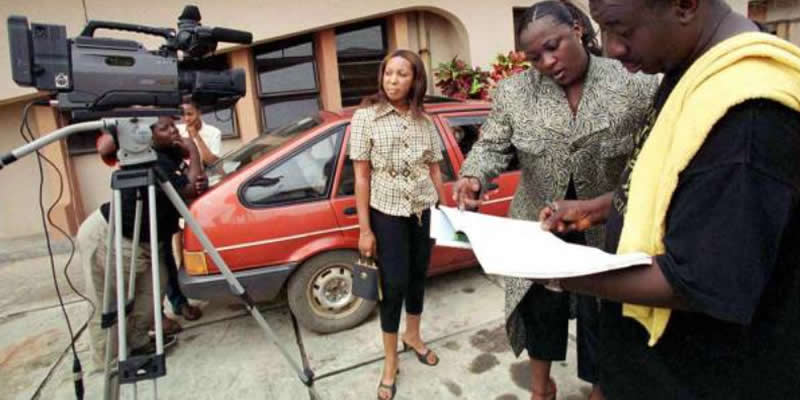
You know, one of the things people rarely talk about out loud in Nollywood is how tribalism and favouritism still shape the casting table quietly, but very much alive. It’s not just about talent or hard work; sometimes, it’s about where you’re from, who you know, or who’s in your corner.
And while we love to celebrate how far the industry has come, there’s still this unspoken politics behind the scenes that often decides who gets seen, who gets sidelined, and who keeps shining regardless of performance. It’s messy. But it’s real. And if we’re going to be honest about building a truly inclusive industry, then we have to talk about it.
How Tribalism and Favouritism Still Affect Casting Decisions in Nollywood
In Nollywood, talent is everywhere, but opportunity? Not so much. For every rising star breaking through based on sheer skill, there are countless others stuck behind closed doors, not because they lack what it takes, but because they don’t speak the right language, come from the right place, or have the right connections.
Tribalism and favouritism are two shadows that have followed the industry for years, often quietly influencing casting calls, screen time, and who gets to lead the narrative. To understand just how deep this runs, let’s break down the ways these two forces still shape casting decisions in today’s Nollywood.
A Brief History of Casting Politics in Nollywood
Nollywood didn’t start off as a pan-Nigerian movement. It grew out of regional efforts, small, scattered pockets of passionate creatives telling stories in the languages they knew best, for the people around them. In the early ’90s, it was the Igbo-language filmmakers who first found a formula that worked commercially. It’s hard to talk about that era without mentioning Living in Bondage (1992), produced by Kenneth Nnebue. That movie wasn’t just a cultural reset, it opened the floodgates for hundreds of Igbo-language home videos that would go on to dominate the VHS market for the rest of the decade.
The actors from this era, people like Kanayo O. Kanayo, Pete Edochie, Ngozi Ezeonu, and Chinwetalu Agu, were household names across the East and beyond. But there was a clear cultural center. These films, even when subtitled in English, were deeply rooted in Igbo worldview, values, and language. The East owned that phase of Nollywood.
Then came the 2000s, and with it, a shift. Yoruba-language filmmakers, who had always had a strong theatre tradition, began to harness the video format more aggressively. Actors like Odunlade Adekola, Femi Adebayo, and Funke Akindele (who crossed between Yoruba and English spaces) became faces of a movement that turned Abeokuta, Ibadan, and later, Lagos into buzzing film hubs for Yoruba content. These films often had lower production budgets but rich storytelling steeped in tradition, culture, and humour.
While the Yoruba and Igbo industries were growing side by side, they weren’t exactly mixing. Collaborations were rare. You could almost tell a film’s ethnic roots just by looking at the cast list. By the mid to late 2000s, what became known as “New Nollywood” started to take shape in Lagos. This wave leaned heavily on English-language productions and a more urban, pan-Nigerian appeal. Films like The Figurine (2009) by Kunle Afolayan, and Reloaded (2008) by Emem Isong and Desmond Elliot, marked the transition. Suddenly, production quality went up, cinema releases became a thing, and corporate funding trickled in.
But even this Lagos-centered New Nollywood wasn’t exactly neutral ground. It still reflected dominant ethnic influences, especially from Yoruba and Igbo filmmakers who had the funding, audience base, and connections to scale up. Actors like Ramsey Nouah, Genevieve Nnaji, Rita Dominic, and Jim Iyke became the faces of mainstream Nollywood, not just for their talent, but because they fit into the growing demand for English-speaking, cosmopolitan Nigerian characters. Still, beneath the surface, the industry was building quiet walls, casting circles often tilted toward the familiar: people who spoke the same language, shared similar backgrounds, or were part of the same social networks.
So while the industry was growing in size and global appeal, the same old cultural and ethnic blocs were solidifying behind the scenes. And that set the stage for the tribal and favouritism-driven patterns we still see today, just a little more polished, but not any less political.
Tribalism in Casting Decisions
Tribalism in Nollywood doesn’t always wear a bold face, it’s subtle, quiet, and often dismissed as “normal.” But its presence is deeply felt. It shows up in how casting choices are made, not necessarily because someone said “let’s cast only our people,” but because there’s an unspoken tendency to stick with what’s familiar. It’s the language, the culture, the inside jokes that don’t need explaining, and the comfort of shared heritage. Over time, these tendencies evolve into habits, and those habits become norms that shape the industry.
One of the clearest manifestations of this is the way films, especially big budget or culturally significant ones, are cast along tribal lines. Take Yoruba-led productions, for instance. Even when the storyline doesn’t demand ethnic specificity, you’ll often find an overwhelmingly Yoruba cast. A good example is Aníkúlápó (2022), directed by Kunle Afolayan. While the story is rooted in Yoruba mythology and tradition, its pan-African Netflix promotion gave it the image of a Nigerian cultural export. Yet, the cast was almost entirely Yoruba, from lead actor Kunle Remi to supporting roles played by Bimbo Ademoye, Sola Sobowale, and Hakeem Kae-Kazim. In essence, it was a Yoruba movie with subtitles, packaged for a global stage.
On the flip side, Eastern productions also follow a similar pattern. Lionheart (2018), directed by Genevieve Nnaji, was a proud moment for Nollywood, it was the first Nigerian film acquired by Netflix and the country’s first submission to the Oscars. But the cast was overwhelmingly Igbo. From Genevieve herself, to Nkem Owoh, Pete Edochie, and Onyeka Onwenu, it was a celebration of Igbo excellence, no doubt, but it also reflected how deeply tribal casting is embedded, even in stories that could’ve benefited from more cross-regional texture.
Now, these examples aren’t necessarily criticisms of cultural representation, every tribe has the right to tell its own stories in its own voice. The issue arises when even supposedly pan-Nigerian stories follow the same patterns. When scripts that are set in Lagos, Abuja, or fictional cities still somehow default to a single ethnic cast, it raises questions. Nigeria is a multi-ethnic nation with over 250 tribes. Why then does it feel like only two or three dominate the screen?
Tribalism, when unchecked, limits Nollywood’s potential. It narrows the industry’s view of talent and creates echo chambers where the same accents, faces, and styles are repeated. It reinforces invisible boundaries that discourage actors from crossing into unfamiliar language-based industries, and it feeds into the idea that belonging to a certain tribe gives you a better chance of getting cast.
Until casting decisions begin to actively seek out diverse talent, not just as token gestures, but as a deliberate push toward national representation, Nollywood will keep circling within its cultural bubbles. And in an industry that claims to tell the Nigerian story, that’s a contradiction we can’t keep ignoring.
Favouritism: The Inner Circle Culture
In Nollywood, there’s talent, and then there’s access. And more often than not, it’s access that wins. Favouritism in the industry isn’t new, but it’s become more entrenched with the rise of corporate-backed productions and private studios who, instead of scouting widely, rely heavily on familiar faces. At its core, it’s the age-old Nigerian principle of “who you know” trumping “what you can do.”
This culture thrives in several ways. There’s outright nepotism, casting decisions made based on personal connections, not merit. Then there’s the recycling of actors who, despite mixed audience reception or limited versatility, keep getting cast simply because they’re part of the “circle.” For many producers, there’s comfort in familiarity. They’d rather work with someone they’ve used before than take a chance on new blood. But what that does is close the gate just a little tighter for everyone else.
Look at EbonyLife Films, for instance. It’s one of the biggest production houses in modern Nollywood, known for glossy, high-budget projects like The Wedding Party (2016), Chief Daddy (2018), and Blood Sisters (2022). But a closer look at their cast lists shows a pattern, Ini Dima-Okojie, Deyemi Okanlawon, Kehinde Bankole, and others appear again and again. While these actors are undeniably talented, the repetition begins to feel less like strategy and more like comfort zone casting. The roles often feel written around them, rather than requiring them to stretch or evolve.
Then there’s Play Network, famous for its nostalgia-driven remakes like Living in Bondage: Breaking Free (2019), Nneka the Pretty Serpent (2020), Rattlesnake: The Ahanna Story (2020), Aki and Pawpaw (2021), Glamour Girls (2022), and Blood Vessel (2023). These films lean heavily on veteran actors from the original Nollywood era; Kanayo O. Kanayo, Ramsey Nouah, Chidi Mokeme. While it’s admirable to honour pioneers, Play Network’s formula often sidelines younger, lesser-known actors who could have used the platform to shine. Instead of mixing legacy with freshness, they lean into legacy almost exclusively, sometimes to the detriment of narrative innovation.
This favouritism creates a closed ecosystem. Auditions become performative. Castings are pre-decided. The same actors hop from one blockbuster to another, not necessarily because they fit every role, but because they’re seen as “safe” or are in the right WhatsApp group. Meanwhile, fresh talent is forced to navigate a system where effort and skill aren’t enough, you have to know someone, or hope someone sees you on Instagram and takes a gamble.
For an industry that thrives on storytelling, this clique culture ironically shuts out new stories, because it silences new voices. It reinforces a creative echo chamber where the same styles, accents, body types, and personalities dominate our screens. If Nollywood wants to grow, not just in size but in depth, it has to start seeing casting as an opportunity to discover, not just recycle.
The Gatekeeping Problem
In Nollywood, getting through the door isn’t just about auditioning, it’s about passing through invisible filters set by those who hold the keys. Casting directors, producers, and studio execs often act as unofficial gatekeepers, deciding who gets seen, who gets remembered, and who gets sidelined. And the criteria? It’s rarely ever just talent. It’s chemistry, reputation, alignment with “their people,” or sometimes, just vibes.
The result is a system where access isn’t democratic. It’s curated, sometimes to protect brand identity, sometimes out of convenience, and other times out of outright bias. New actors can’t just walk in with a strong résumé or a great reel. They’re often expected to “belong” to a clique, a camp, a certain cultural or social vibe. If you don’t belong, you’re either invisible or kept at the bottom of the call sheet.
Gatekeeping in Nollywood doesn’t always look like someone saying “no.” Sometimes, it’s just someone ignoring you. Or making sure you’re never in the room. Or telling you you’re “not the right fit” even when the role description matches you perfectly. It’s producers sending out casting calls knowing full well they already have someone in mind. It’s directors who rely on DMs and private auditions for serious roles, keeping everything within the fold.
And for those trying to enter, the message is clear: play the game, or be left out. This creates an industry where authenticity can become a liability. Where actors may feel pressure to adjust accents, mimic trending personalities, or stay silent about mistreatment, just to stay visible. The price of admission isn’t just performance; it’s politics.
As Nollywood continues to expand, especially under the spotlight of global platforms like Netflix, Prime Video, and Showmax, this kind of selective inclusion undermines the very idea of growth. You can’t build a national, or continental cinema on closed doors. If the gatekeepers continue to guard the same faces, the same styles, and the same inner circles, then we’re not evolving, we’re just rotating the same wheel in a different studio.
The Impact on Talent and Storytelling
When tribalism and favouritism dominate casting decisions, the ripple effects go far beyond the set. The most immediate casualty is talent; real, raw, deserving talent that simply never gets seen. In a country as diverse as Nigeria, with over 250 ethnic groups, it’s baffling that certain tribes still dominate screen time, especially in major productions. Brilliant actors from minority tribes; Efik, Tiv, Nupe, Urhobo, Ibibio, rarely make it into mainstream Nollywood unless they assimilate into the dominant industry cultures. Their accents, names, or even facial features are often considered “risky” or “too ethnic” for general appeal.
And when those from outside a dominant tribe are cast into culturally heavy roles, say, an Igbo actor in a Yoruba epic, the authenticity is immediately questioned. Audiences (and sometimes critics) latch onto the accent, the intonation, or even how the lines are delivered. But what’s missed is the systemic imbalance that created this tension in the first place: that these roles were not designed with Nigeria’s full cultural landscape in mind, nor were the casting decisions inclusive enough to allow for better cultural alignment.
It’s not just about fairness; it’s about storytelling itself. The overuse of the same actors leads to repetition, not just in who we see, but in how we experience their performances. There’s only so much range that can be squeezed out of a cast list that feels like a WhatsApp group reunion. Predictable casting breeds predictable delivery. And when the actor already played a similar role in a previous hit, the stakes feel lower, the immersion weaker. Viewers are not watching characters, they’re watching brands.
That’s why many pan-Nigerian stories often fall short of feeling truly national. The scripts may be written to reflect a broad Nigerian identity, but the casting tells a different story: one rooted in Lagos-centric networks, tribal familiarity, and personal affiliations. The result? A film set in Jos might have a Yoruba family at the center of its narrative, or a supposed “Northern” love story might feature actors who’ve never convincingly portrayed Northern characters. It pulls audiences out of the story and undermines the believability Nollywood claims to strive for.
In the end, it’s not just actors who lose, it’s the audience. We get stories that could’ve been richer, performances that could’ve surprised us, and cultural intersections that could’ve deepened our sense of identity. But instead, we’re handed a loop of familiar faces and safe bets. If Nollywood truly wants to stand as Africa’s storytelling giant, it has to start casting with courage, not comfort.
What’s Changing (and What’s Not)
There’s no denying that the Nollywood landscape is shifting; slowly, unevenly, but visibly. With global platforms like Netflix, Amazon Prime Video, and Showmax planting flags in the Nigerian industry, new faces are emerging, and some long-standing patterns are being questioned. These platforms have created a broader appetite for fresh talent, pushing productions to diversify casting a little more. We’ve seen breakout stars in recent years, actors who might never have broken through in the old Nollywood structure, getting lead roles and international attention. It feels like the gate is cracking open.
But here’s the catch: even global platforms aren’t immune to local biases. Many of these “international” Nigerian productions still follow familiar casting lines. You’ll still see the same clusters of Lagos-based, Yoruba-majority actors headlining projects, and producers still lean on known names for perceived market safety. Sometimes, it feels like the only thing that’s changed is the camera quality, not the casting mindset.
That said, the indie film space is pushing harder against the grain. Directors like C.J. Obasi (Mami Wata, 2023) are boldly exploring stories rooted in minority cultures and casting actors who reflect that reality. Mami Wata featured West African talents outside the mainstream pool, from Evelyne Ily Juhen to Uzoamaka Aniunoh, actors who bring fresh energy and authenticity to the screen without relying on Nollywood’s over-recycled stars. These independent filmmakers aren’t just diversifying for diversity’s sake; they’re choosing authenticity over convenience, story over clique.
Still, the bulk of high-budget, cinema-bound, or platform-backed Nollywood productions remain comfortably tribal-familiar. Whether it’s the nostalgic remakes from Play Network, or the glossy series from EbonyLife, there’s an ongoing reliance on a tight circle of actors, often Yoruba or Igbo, with very little effort to reflect the country’s full ethnic spread. And even when Hausa or minority roles are written, they’re often portrayed by non-native speakers or actors with limited cultural context.
Award shows and streaming platforms are beginning to tilt things, though, slowly encouraging a merit-based spotlight system. When AMVCA nods go to lesser-known actors from smaller productions, or when a movie like Eyimofe (2020) gets global festival attention without the usual star power, it sends a subtle message to the industry: the audience is ready for something different.
Still, until the casting room fully opens up, and until producers are willing to risk unfamiliarity for the sake of better storytelling, progress will remain selective. What’s changing is promising, but what’s not changing remains the core problem.
Path Forward: What Needs to Change
If Nollywood truly wants to reflect the spirit of Nigeria, a country defined by its multiplicity, then the change has to begin with how stories are cast. For too long, casting decisions have functioned like a private members’ club, guided more by proximity than merit, and more by tribal comfort than national consciousness. But a better path is possible, and frankly, necessary for the industry’s longevity.
First, there must be a stronger push for open casting calls. Real ones. Not the performative ones where decisions have already been made before auditions begin. By opening up auditions to talent across Nigeria, regardless of tribe, network, or prior exposure, the industry will begin to tap into the vast reserve of underutilized performers who have everything it takes but simply lack access. A Benue-born actor shouldn’t need to relocate to Lagos and mimic a Yoruba inflection to be noticed. If a story is truly national, the casting should reflect that.
Second, the stories themselves need to change. The dominance of ethnically centered narratives means that scripts often don’t require diversity, and so producers don’t bother seeking it. There’s a need for more pan-Nigerian scripts, stories that intentionally draw from Nigeria’s many cultures, languages, and geographies. Imagine a thriller set across Maiduguri, Port Harcourt, and Osogbo, requiring a Fulani lead, an Ijaw supporting character, and a Yoruba antagonist. That kind of storytelling forces inclusion, not as a token gesture, but as a narrative necessity.
But beyond the stories, the casting process itself must become more transparent. Casting directors, producers, and even directors must be held accountable for their choices. Why was this actor chosen? Was there an audition? Was the role opened up beyond your immediate circle? These are the kinds of questions industry observers, unions, and fans should start asking. It’s time to shift the culture from who-you-know convenience to merit-based credibility.
Lastly, training institutions and film schools have a key role to play. They must become intentional about bridging the tribal gap. Acting programs, writers’ residencies, and directing workshops need to bring in talents from across the country, not just the South-West. Initiatives like the Multichoice Talent Factory or the EbonyLife Creative Academy are good starts, but there’s more to be done in decentralizing where and how talent is discovered. And film unions and guilds need to make inclusion a core metric, not just a buzzword.
Nollywood has come a long way, but to become the truly global powerhouse it wants to be, it must confront the biases that still shape its inner workings. The industry can’t keep telling stories of a united Nigeria while hiring only within a five-mile radius. Talent is everywhere. The system just needs to start looking.
Conclusion
Nollywood is growing, no question about that. From neighborhood video clubs in the ’90s to global premieres on Netflix and festival circuits, the journey has been remarkable. But for all that progress, one truth remains stubbornly in place: if the industry is going to reflect the full richness of Nigeria’s cultural landscape, it has to confront its old habits around tribalism and favouritism in casting.
This isn’t about erasing anyone’s identity. Far from it. It’s about expanding the lens. It’s about making room for all the identities that make up this country; from Tiv to Kanuri, Ijaw to Ibibio, not just Yoruba or Igbo. It’s about giving a stage to voices that have been muted, and faces that have been boxed out, not because they lacked talent, but because they didn’t “know someone.”
The stories Nollywood tells are powerful. They shape how Nigerians see themselves and how the world sees us. So let the stories be wide enough, deep enough, and bold enough to reflect everyone. The industry owes it to its talent, its legacy, and most importantly, its audience.
Let’s create a Nollywood where every Nigerian, regardless of tribe or connection, can see themselves, not just as extras in the background, but as leads, as storytellers, as equals. That’s the real next chapter.