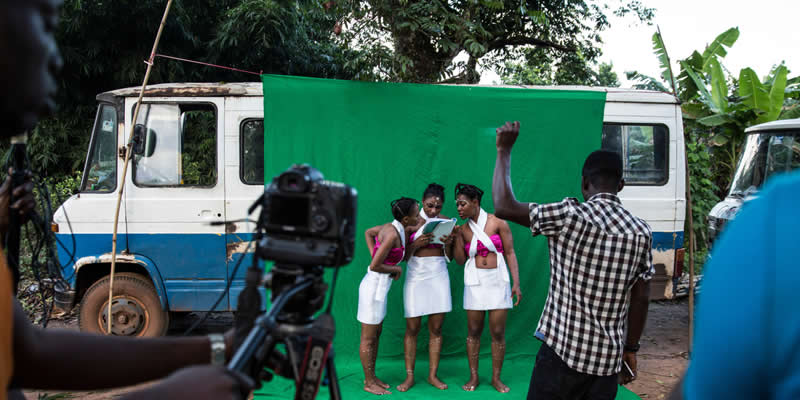
Nigeria’s film industry is one of the most vibrant and prolific in the world. It produces thousands of movies annually, captivating audiences across Africa and beyond. From Lagos to London, Nollywood films have found an eager audience, proving that the industry has not only cultural significance but also serious economic potential. However, the process of making these films is anything but glamorous.
Behind the camera, Nigerian directors face a unique set of challenges that often test their patience, creativity, and resilience. From battling financial constraints and unpredictable government policies to dealing with security threats and infrastructure deficiencies, filmmakers must navigate a lot of problems just to get their projects across the finish line.
Despite the rise of streaming platforms like Netflix and Amazon Prime, which have given Nollywood a global stage, the obstacles remain daunting. In this article, we’ll take a deep dive into the realities and challenges of filming in Nigeria, exploring the struggles directors face and how they continue to fight against the odds to tell their stories.
8 Challenges of Filming in Nigeria: What Movie Directors Face
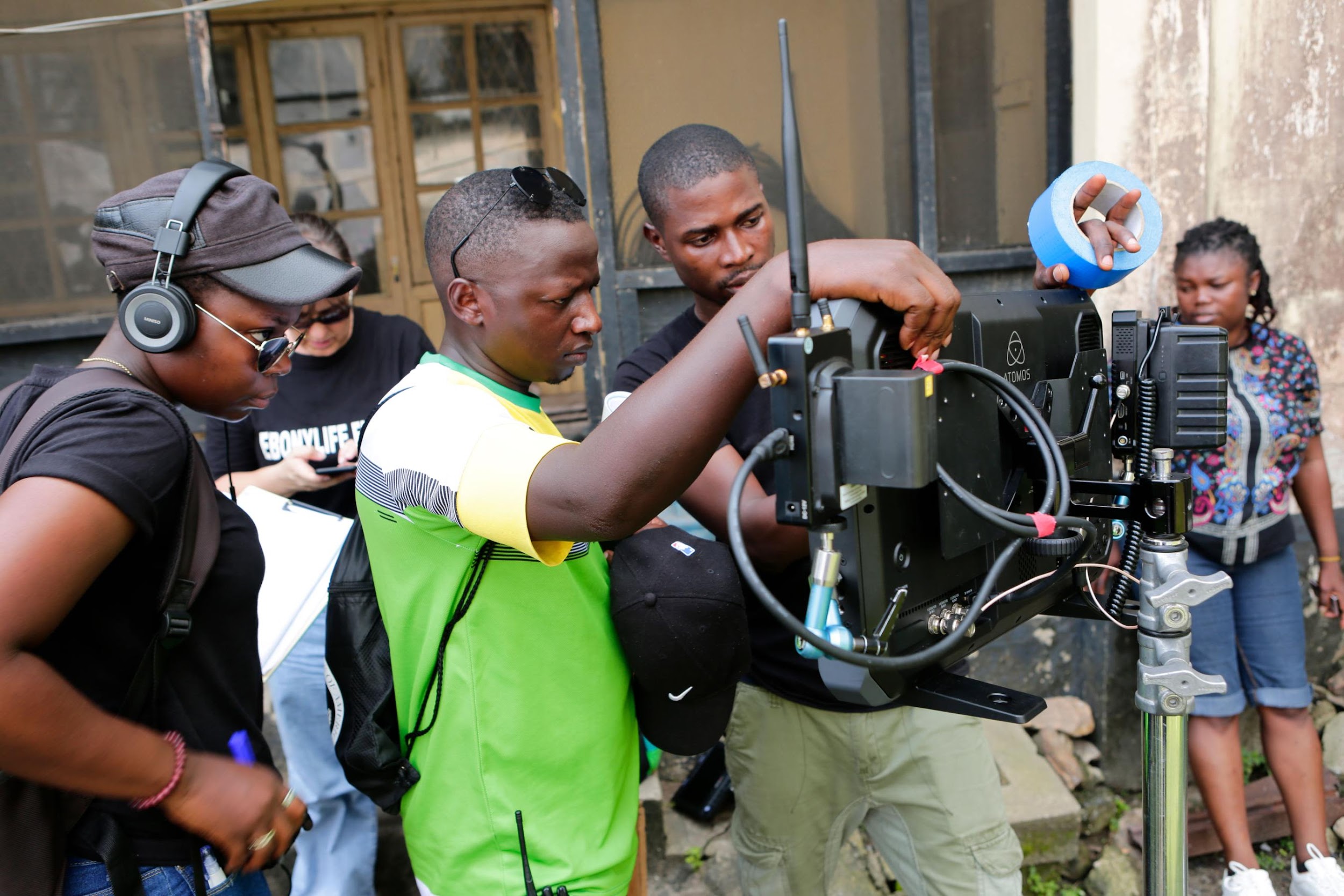
Filming in Nigeria refers to the process of producing movies, documentaries, television shows, and other visual content within the country. It encompasses everything from pre-production planning to shooting and post-production editing. Nigeria’s film industry is one of the largest in the world, producing thousands of films annually.
A director is the creative leader and decision-maker of a film, responsible for shaping its artistic and storytelling vision. They oversee the entire filmmaking process, from interpreting the script to guiding actors, coordinating with the crew, and making critical decisions on cinematography, pacing, and overall tone.
In Nigeria, a director’s role is even more demanding due to the industry’s unique challenges. Beyond creative duties, they often navigate several challenges Including; financial struggles, cultural sensitivities, censorship laws, logistical hurdles, and technical limitations all while ensuring that the final product meets industry and audience expectations.
Here are eight of the challenges often faced by directors filming in Nigeria:
Financial Limitations and the Never-Ending Battle for Funding
Filmmaking is an expensive endeavor, and in Nigeria, finding adequate financial support is a constant struggle. Unlike Hollywood, where major studios and investors pour millions into productions, Nollywood directors often rely on personal savings, loans, and small-scale sponsorships. Even when corporate investors step in, their contributions rarely cover the full cost of production.
For instance, in 2023, the highly anticipated film Shanty Town faced multiple delays due to financial constraints. The series, which featured top-tier actors like Chidi Mokeme, Ini Edo, and Nancy Isime, required substantial funding to match its ambitious storyline and set designs.
Similarly, Jagun Jagun (2023), a visually stunning epic from Femi Adebayo, cost billions of naira to produce. Femi Adebayo stated that he even sold some of his properties to fund the project; however, the exact production cost is not publicly available. The film’s impressive battle sequences and large-scale set pieces required a hefty budget, and securing that kind of funding in Nigeria is no small feat.
Unlike producers who handle funding logistics, directors bear the direct impact of budget constraints on their creative vision. A lack of proper financing affects their ability to secure top-tier actors, high-quality equipment, skilled crew members, and suitable locations, forcing them to work with what is available rather than what is ideal for the story.
Many Nigerian directors have had to compromise on cinematography, set design, and even post-production quality due to budget cuts. In some cases, they are forced to shoot under tight schedules, limiting the number of takes and reducing overall production value. Without stable funding, directors struggle to execute their artistic vision fully, making it difficult to compete with global industries.
The harsh reality is that many promising films never see the light of day simply because there isn’t enough money to complete them. Some directors resort to crowdfunding or personal sacrifices, selling properties or taking on debt to keep their projects alive.
Unreliable Infrastructure and the Constant Logistical Nightmare
Infrastructure in Nigeria remains a filmmaker’s worst enemy. From unstable electricity and poor road networks to the general lack of film-friendly locations, directors often find themselves struggling just to set up a basic shoot.
Electricity is a major hurdle. A typical film set requires consistent power for cameras, lighting rigs, and sound equipment, yet Nigeria’s national power supply is notoriously unreliable. Most productions depend on generators, which are not only costly but also prone to breaking down. With rising fuel prices, the cost of running generators skyrocketed, forcing many filmmakers to reduce their shooting hours.
In addition, poor road networks make transporting crew and equipment a logistical nightmare. During the filming of Gangs of Lagos (2023), production was frequently delayed due to Lagos’ infamous gridlock. The challenge of moving between locations led to unexpected expenses, including paying crew members for extra hours spent in traffic rather than on set.
Remote productions suffer even more. When The Black Book (2023), starring Richard Mofe-Damijo, was shot in various parts of Nigeria, the team struggled with inaccessible locations, lack of decent accommodation, and minimal support from local authorities. At one point, the crew had to delay filming for days simply because the roads leading to their set were impassable. The film’s director, Editi Effiong, noted that the project faced challenges that necessitated relocating the production from Lagos to Kaduna and back, indicating substantial logistical complexities.
For directors with ambitious projects, these infrastructural deficiencies often mean spending more money on logistics than on the actual creative process, ultimately affecting the final product.
Government Policies, Bureaucracy, and the Costly Red Tape
Dealing with the Nigerian government can be an exhausting experience for filmmakers. Permits to shoot in public spaces are often expensive, slow to process, and come with unnecessary bureaucratic hurdles. In many cases, even after securing legal approval, local authorities or “area boys” (street thugs) demand additional informal payments, further increasing production costs.
For the second season of the Aníkúlápó series, Kunle Afolayan opted to film in Ghana after initially considering locations in Nigeria and Togo. This decision hints at potential challenges in Nigeria that may have influenced the move.
Government censorship remains a significant barrier for filmmakers. Fuelling Poverty (2012), a documentary by Ishaya Bako that examined the Occupy Nigeria protests and fuel subsidy fraud, was banned by the Nigerian government through the National Film and Video Censors Board (NFVCB). The NFVCB justified the ban by labeling the film “highly provocative,” arguing that it could “incite or encourage public disorder and undermine national security,” effectively prohibiting its public exhibition.
The film ’76 (2016), directed by Izu Ojukwu, faced intense scrutiny from the Nigerian Military due to its sensitive subject matter, the 1976 military coup and the assassination of General Murtala Mohammed. Before filming could begin, the script underwent a rigorous seven-month investigation and approval process. Additionally, the military assigned personnel to train actors and oversee the portrayal of military operations, ensuring accuracy and compliance with official narratives.
These challenges not only slow down production but also push some filmmakers to seek alternative locations or release platforms. Without reforms that streamline regulations and support the industry, Nigeria’s filmmakers will continue to struggle against a system that should be enabling, not hindering, their craft.
Security Threats, Armed Attacks, and the Cost of Staying Safe
Security concerns remain one of the greatest risks in Nollywood. Armed robberies, kidnappings, and area boys disrupting shoots have become all too common. Directors filming in remote areas or less secure parts of Nigeria must hire private security, sometimes even military escorts, to keep their cast and crew safe.
In May 2022, actress Nkechi Blessing and her production crew were attacked by hoodlums in Abeokuta, Ogun State. The thugs demanded money, disrupted the shoot, and damaged vehicles. The production manager, Akinyemi Olufemi, was injured during the altercation.
Also, in December 2022, while filming in the Sawmill area of Gbagada, Lagos, actor Akeem Adeyemi, known as Sugar Boy, was assaulted by local thugs, commonly referred to as “area boys.” The assailants demanded money, and upon refusal, they attacked Adeyemi, resulting in visible injuries. His colleague, Wumi Toriola, highlighted the incident on social media, expressing concern over the safety of filmmakers in such environments.
Another example happened On December 24, 2023, during a film shoot at Napoli Hotel in Iperu Remo, Ogun State, director Azeez Ijaduade was injured when a police officer discharged a firearm, and the shell struck him in the neck. Ijaduade was promptly taken to Babcock University Hospital in Ilisan Remo; he eventually fully recovered.
Addressing these issues requires stronger industry protections, streamlined policies, and enhanced security measures to ensure a safer and more sustainable filmmaking environment.
Lack of Skilled Technical Crew and the Overreliance on Multitasking
While Nollywood has no shortage of passionate filmmakers, finding highly skilled crew members can be challenging. Unlike Hollywood or Bollywood, where specialization is the norm, many Nollywood crew members take on multiple roles due to the industry’s budget constraints and skill shortages.
For instance, the Netflix film House of Ga’a, released in July 2023, employed a visual effects team composed entirely of foreign experts. Similarly, South African cinematographer Jonathan Kovel has contributed to several Nollywood Netflix projects, including Shanty Town, A Naija Christmas, Aníkúlápó, and Citation.
However, there are notable exceptions. The film Lisabi challenged this trend by utilizing an entirely Nigerian crew, demonstrating the industry’s growing local capacity. These instances highlight both the industry’s occasional reliance on international expertise and its ongoing efforts to build and showcase local talent.
Many productions also suffer from last-minute crew changes, as people often jump between projects, leaving gaps that are difficult to fill.
In Nollywood, directors often wear multiple hats, not out of preference but necessity. Due to budget constraints, a lack of specialized personnel, and the fast-paced nature of the industry, filmmakers frequently find themselves handling multiple roles, directing, producing, editing, and even marketing their films. While this multitasking showcases versatility, it also affects film quality, efficiency, and creative focus.
Take Funke Akindele, for example. In A Tribe Called Judah (2023), she didn’t just direct; she also wrote, produced, and spearheaded the film’s marketing. While her efforts led to record-breaking success, her heavy involvement highlights how Nollywood lacks a well-structured production system where roles are clearly defined. Instead, many filmmakers have to take on additional tasks to ensure their projects succeed.
Similarly, Kunle Afolayan, known for his detailed storytelling, often manages multiple aspects of his productions. For Aníkúlápó (2022), he was not only the director but also deeply involved in the cinematography, set design, and casting. This level of multitasking, while impressive, also underscores the lack of a specialized workforce that could help streamline these processes.
The reliance on multitasking is often driven by necessity rather than choice. Unlike Hollywood, where a director can focus solely on vision while a production team handles the logistics, Nollywood directors must take on multiple roles to ensure a film reaches completion. This challenge makes it harder for filmmakers to focus entirely on the creative process, leading to overworked directors and sometimes rushed productions.
Addressing this issue requires more investment in industry training, better budget allocations, and a push for specialization. Nollywood has proven its resilience, but for the industry to compete globally, it must move beyond a system where directors have to do it all.
The Challenges of Managing Large Casts and Egos on Set
Dealing with actors is another challenge Nollywood directors frequently face. While Nigeria boasts some of the most talented performers in Africa, managing large casts, clashing personalities, and unprofessional behavior can derail production.
For instance, during the making of Chief Daddy 2 (2022), tensions arose between actors and the production team over script changes and creative differences. Some actors publicly criticized the final edit, revealing the difficulties directors face in balancing multiple personalities and expectations. The backlash highlighted the challenge Nollywood directors face when trying to balance the creative vision of producers, actors, and financiers while still delivering a film that resonates with audiences.
Another case involved Brotherhood (2022), where Tobi Bakre and other lead actors had to undergo intense physical training for their roles. Some cast members reportedly struggled to keep up with the demanding schedule, causing delays. Directors often have to act as mediators, ensuring that conflicts don’t spiral into full-blown disputes that could jeopardize the film.
There have also been cases where actors walk off set due to unpaid wages or disputes over contract terms. The lack of standardized industry regulations means filmmakers sometimes struggle to enforce agreements, leading to last-minute recasting or production halts.
Handling egos, ensuring actors stay committed, and maintaining a harmonious set is a balancing act that Nollywood directors must master to keep production on track.
Limited Access to High-End Film Equipment and the Cost of Innovation
Another major setback for Nollywood directors is the limited availability of top-tier filmmaking equipment. Unlike Hollywood, where state-of-the-art cameras, advanced lighting rigs, and top-quality post-production facilities are readily accessible, Nollywood filmmakers often have to rent expensive gear or make do with lower-grade alternatives.
For example, during the production of October 1 (2014), significant efforts were made to acquire authentic props and equipment to accurately depict the 1960s setting. Art director Pat Nebo and his team created many props; however, certain items, such as television sets and shotguns from the 1950s, were imported from the United States and the United Kingdom due to their unavailability in Nigeria. Additionally, while some antique vehicles were sourced locally and refurbished, others had to be imported to meet the film’s requirements.
Similarly, Kunle Afolayan, known for pushing cinematic boundaries, revealed that Aníkúlápó required custom-built sets and imported camera technology to achieve its historical authenticity. The lack of cutting-edge equipment within Nigeria meant additional expenses in shipping and handling.
This scarcity of resources forces filmmakers to either compromise on quality or spend beyond their budget. Some directors have started investing in their own equipment to avoid rental issues, but this is not a feasible solution for everyone.
While Nollywood has made significant strides in digital effects, the industry still struggles to compete with the high-end CGI of Hollywood or Bollywood. This is largely due to the absence of world-class post-production studios in Nigeria, forcing filmmakers to outsource editing and special effects to foreign studios, which increases costs and delays project completion.
The Ever-Present Issue of Cultural Sensitivity and Censorship
Nigeria is a deeply traditional and religious country, and filmmakers often find themselves navigating a minefield of cultural and political sensitivities. Directors must constantly self-censor to avoid backlash from religious groups, traditional institutions, or government agencies.
The backlash against Gangs of Lagos (2023) for its depiction of the Eyo masquerade as part of a criminal underworld highlights the delicate balance between creative freedom and cultural respect. Traditional leaders and cultural groups condemned the film, arguing that it misrepresented an important Yoruba tradition, sparking calls for censorship. This reflects the broader struggle filmmakers face when their storytelling clashes with deeply rooted cultural and religious beliefs, often leading to public outrage, industry pushback, and even government intervention.
Similarly, movies with LGBTQ+ themes face immense restrictions. In 2022, Ìfé, a film about a lesbian couple, was banned from local cinemas despite receiving international praise. The Nigerian Film and Video Censors Board (NFVCB) cited “moral standards” as the reason, reinforcing the government’s rigid stance on non-heteronormative content.
Censorship isn’t just about social issues, it also extends to political narratives. In 2023, some filmmakers revealed they faced pressure to alter scripts that critiqued government policies. The fear of being blacklisted or having their films restricted often forces directors to dilute hard-hitting themes, limiting artistic freedom.
This challenge has led to a rise in independent filmmakers choosing to bypass traditional distribution channels and release directly on international streaming platforms, where censorship is less restrictive. However, this means that many important local stories never reach the audiences that need them most.
Frequently Asked Questions
Below are some of the most pressing questions about the realities of filming in Nigeria, and the unique challenges directors must overcome to bring their stories to life.
Why do Nollywood directors struggle more with logistics compared to filmmakers in other countries?
Unlike countries with structured filmmaking ecosystems, Nigeria’s unpredictable road conditions, traffic congestion, and lack of film-friendly infrastructure make every production a logistical nightmare. In some cases, getting to a film set feels like an adventure in itself, muddy roads swallowing vehicles, permits taking weeks instead of days, and crews spending hours in traffic instead of shooting. This isn’t just about inconvenience; it’s about time lost, money wasted, and creative momentum disrupted.
What’s the worst thing that can happen to a Nollywood director during production?
Here are some of a movie director’s worse nightmare while filming
- Losing an entire film reel because power went out mid-backup.
- Being forced to abandon a location because a local chief suddenly demands “settlement money” to continue shooting.
- An actor disappearing to shoot another movie while still being needed on set.
- A major plot twist (literally) when roads become impassable, delaying key scenes.
In The Black Book (2023), the crew faced location issues and roadblocks that forced them to rethink schedules on the fly.
If a Nigerian director finally gets funding, does that solve all their problems?
Not even close. Funding is just the beginning. Once a director secures financing, they must deal with budget overruns caused by unexpected expenses, like generators guzzling fuel faster than expected, last-minute permit fees, or even sudden inflation driving up costs of props and rentals. A well-planned budget can become useless overnight if unforeseen obstacles arise.
How do directors keep actors from clashing on set?
Directors aren’t just storytellers, they’re part-time psychologists, negotiators, and peacekeepers. In Nollywood, where ensemble casts are common, ego clashes can spiral out of control. A director’s job isn’t just to shoot a film; it’s to manage expectations, smooth over conflicts, and somehow keep the production from imploding.
Why do Nigerian directors still import filmmaking equipment when Nollywood is booming?
Because high-quality film equipment is still scarce locally. Even though Nollywood is a billion-dollar industry, directors often import cameras, lighting, and sound gear from the U.S., UK, or South Africa to achieve the quality they envision. For example, while shooting The Black Book (2023), Editi Effiong had to bring in specialized equipment because local options couldn’t meet the technical demands of the film.
How does piracy specifically hurt Nigerian directors?
Imagine spending months crafting a film, only to wake up and see it freely circulating on Telegram, WhatsApp, and street corners before its official release. That’s the reality Nollywood directors face. Many never recover investments because pirates rip movies and sell them for a fraction of the cost. Even streaming deals can’t fully protect against illegal downloads. Piracy isn’t just an economic problem, it’s a creative killer.
What’s one challenge directors never prepare for?
Censorship. A director can pour their heart into a story, only for the NFVCB to demand major cuts, or outright ban it. It happened with Fuelling Poverty (2012), a documentary about Nigeria’s fuel subsidy crisis, which was restricted for being “too sensitive.” Directors sometimes self-censor just to avoid the hassle, meaning some of the best stories never get told as they should.
Do Nollywood directors ever get full creative control?
Rarely. Whether it’s investors wanting market-friendly stories, actors requesting changes, government pushing censorship, or audiences preferring commercial over artistic films, directors constantly have to compromise. Nollywood is fast-moving, profit-driven, and deeply cultural, meaning directors walk a tightrope between vision and reality.
Is making a film in Nigeria as difficult as it sounds?
Absolutely. But despite the endless logistical, financial, and creative struggles, Nollywood continues to thrive. Directors find ways to tell powerful stories, adapt to challenges, and push boundaries in a film industry that was built on resilience.
Conclusion
Filming in Nigeria is a feat of endurance, creativity, and resilience. Directors must navigate an unpredictable landscape filled with financial struggles, infrastructural deficits, logistical nightmares, and creative limitations imposed by censorship and piracy. Every project demands not just artistic vision but also the ability to adapt to constant setbacks, whether it’s securing funding, battling poor road networks, negotiating with local authorities, or managing the diverse personalities that come with large casts.
Yet, despite these hurdles, Nollywood continues to thrive, producing films that resonate locally and internationally. Directors push forward, finding innovative solutions, leveraging technology, and collaborating with both local and global partners to elevate the industry. The challenges may be daunting, but they have not stopped Nigerian filmmakers from telling powerful stories that capture the essence of the country’s rich culture and experiences.
Ultimately, while filming in Nigeria is far from easy, it is this very struggle that shapes the grit and ingenuity of Nollywood’s directors. Every production is a testament to their determination to create, to tell stories that matter, and to carve out a space for Nigerian cinema on the world stage.